
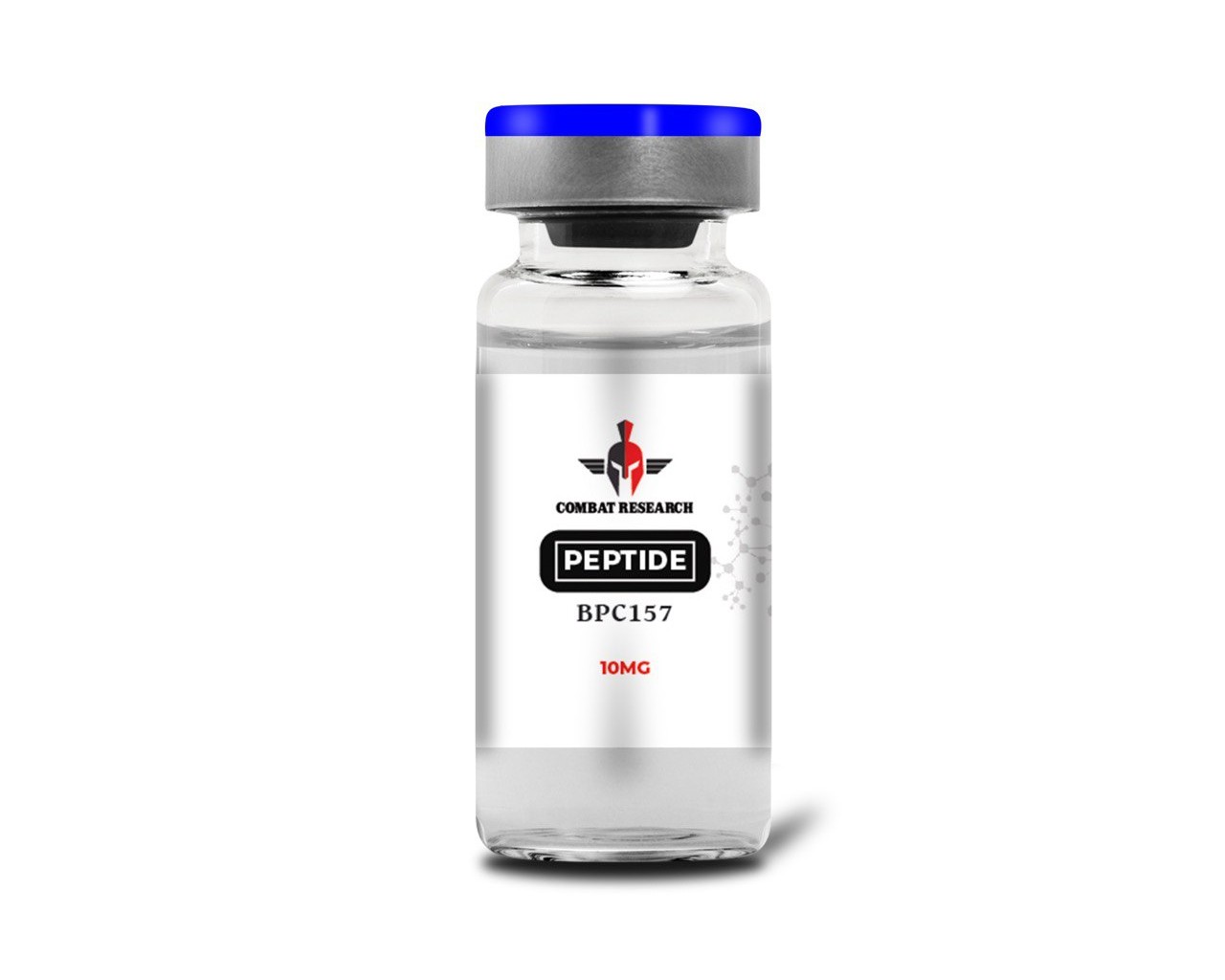
BPC 157 10mg

$45.00
- Enhanced Healing: BPC-157 promotes the healing of tendons, ligaments, muscles, and nerves, making it beneficial for recovery from injuries.
- Reduced Inflammation: It has anti-inflammatory properties that can help alleviate pain and swelling in injured areas.
- Improved Joint Health: BPC-157 may enhance joint function and reduce symptoms of joint pain.
- Gastroprotective Effects: It can help protect the gastrointestinal tract, promoting healing of ulcers and reducing inflammation in the gut.
- Increased Blood Flow: BPC-157 may promote angiogenesis (the formation of new blood vessels), improving blood flow to injured tissues.
Product Description — BPC-157 (BPC15)
Product Name: BPC-157 (Body Protection Compound 157)
CAS Number: 137525-51-0 Wikipedia+2PubChem+2
Alternate Names / Synonyms: BPC 157, BPC15, PL 14736, gastric pentadecapeptide, “Body Protection Compound”
Overview
BPC-157 is a synthetic 15-amino acid peptide (pentadecapeptide) derived from a fragment of a larger gastric peptide. Gut N’ Liver+3MDPI+3ResearchGate+3 It is sometimes referred to in the literature as BPC15 or Body Protection Compound. Frontiers+1
Although it is not approved by the U.S. Food and Drug Administration (FDA) for therapeutic use, BPC-157 appears in the public domain as a research peptide and is often marketed for investigational, cosmetic, or laboratory use only. Wikipedia+4precisionFDA+4Frontiers+4
Chemical & Physical Properties
| Property | Value |
|---|---|
| Molecular Formula | C₆₂H₉₈N₁₆O₂₂ PubChem+2usbio.net+2 |
| Molecular Weight | ≈ 1,419.56 Daltons ChemicalBook+2usbio.net+2 |
| Appearance | White to off-white solid / lyophilized powder usbio.net+2ChemicalBook+2 |
| Solubility | Slightly soluble in water; other solvents etc. to be determined per formulation ChemicalBook+2usbio.net+2 |
| Stability | Stable under certain conditions, resisting some enzymatic degradation; may require proper storage (cold, desiccated) PubChem+3ResearchGate+3Gut N’ Liver+3 |
Mechanism & Preclinical Evidence (Summary)
Important caveat: The following information is drawn from preclinical / in vitro / animal studies, and does not establish approved clinical use or safety in humans.
-
BPC-157 has been studied for its cytoprotective, tissue-repair, angiogenic, and anti-inflammatory potential in various preclinical models. PMC+4MDPI+4Gut N’ Liver+4
-
In tendon fibroblasts, BPC-157 has been shown to upregulate growth hormone receptor expression, possibly amplifying growth hormone–driven proliferation and repair pathways. PMC
-
In musculoskeletal injury models, some studies report improved structural and functional outcomes in tendon, ligament, bone, and muscle after BPC-157 administration. Gut N’ Liver+3PMC+3MDPI+3
-
Pharmacokinetic studies in rats and dogs suggest rapid elimination (half-life < 30 min) and metabolism to small peptide fragments, with excretion via urine and bile. Frontiers
-
No major toxicity was observed in the animal models used, but clinical safety in humans remains unestablished. PMC+2Frontiers+2
Permissible (Regulation-Safe) Claims & Statements
To maintain compliance and avoid unapproved claims, you may include statements such as:
-
“For research use only (not for human or veterinary use).”
-
“This product is not an FDA-approved drug.”
-
“Intended for laboratory, experiment, or in vitro / animal research applications.”
-
“No claims are made that this product treats, cures, or prevents any disease.”
BPC-157 (CAS 137525-51-0) – Research Peptide / Investigational Use
BPC-157 (also known as BPC 15 or Body Protection Compound 157) is a synthetic pentadecapeptide derived from a fragment of a gastric peptide. With molecular weight ~1,419.56 Da (C₆₂H₉₈N₁₆O₂₂), it is often used in in vitro and in vivo research settings to explore its reported cytoprotective, angiogenic, and tissue repair properties (preclinical evidence only).
It is important to emphasize: this product is for research use only, and is not an FDA-approved drug or supplement for human or veterinary use. No claims are made regarding treatment, prevention, or diagnosis of disease.
Key Features & Notes
CAS No.: 137525-51-0 (free base) PubChem+2Wikipedia+2
Appearance: white to off-white lyophilized powder ResearchGate+3usbio.net+3ChemicalBook+3
Stability: Resistant to certain enzymatic degradation; proper storage (cold, dry) recommended
Pharmacokinetics (animal studies): Rapid clearance (t₁/₂ < 30 min), metabolism to small fragments, excretion via urine/bile Frontiers
Study Use: Investigations into tissue repair, angiogenesis, anti-inflammatory response, tendon/ligament models, etc. (preclinical)
Storage & Handling
Store in a desiccated, cold environment (e.g., –20 °C or lower). Reconstitute under sterile conditions. Protect from repeated freeze–thaw cycles.
Suggested References / Links to Medical Literature
Here are some primary studies and review articles you can link to (or cite) to support the description:
-
“Pharmacokinetics, distribution, metabolism, and excretion of body-protective compound BPC157” — He et al., Frontiers in Pharmacology, 2022. Frontiers
-
“Emerging Use of BPC-157 in Orthopaedic Sports Medicine” — Vasireddi et al. (systematic review) PMC
-
“Pentadecapeptide BPC 157 Enhances the Growth Hormone Receptor Expression in Tendon Fibroblasts” — Chang et al. PMC+1
-
“Multifunctionality and Possible Medical Application of the BPC 157 Peptide” (Review & Patent Review) MDPI+1
-
“Stable Gastric Pentadecapeptide BPC 157, Robert’s cytoprotection concept” — review in Gut and Liver journal Gut N’ Liver
You can embed these as links in your product page or PDF as “Further Reading / References.”
-
FOR RESEARCH USE ONLY
Be the first to review “BPC 157 10mg”
Related products

Peptides
Peptides

Peptides

Peptides
Peptides
Peptides

Peptides

Peptides
Reviews
There are no reviews yet.